


Real Honey isn’t Cheap, Cheap Honey isn’t Real!
There’s a strange contradiction that plays out across Britain every single day. We’ll stroll into a coffee chain, confidently hand over £6 for a cup of sugary brown milk, call it a treat, and carry on with our lives. Yet present the same person with a jar of real, raw, locally produced honey… and suddenly they turn into an economic strategist. “£7? For honey?”
Let’s talk about why that reaction makes no sense.
The UK doesn’t produce enough honey
The UK only produces around 10–20% of the honey it consumes each year (BBKA; National Honey Monitoring Scheme). The rest—80–90%—is imported. And here’s the kicker: imported honey is often blended, ultra-filtered, overheated, and in some cases so adulterated with sugar syrups that it barely qualifies as honey at all.
That bargain-bin supermarket “honey” that pours like golden water? It’s cheap for a reason.
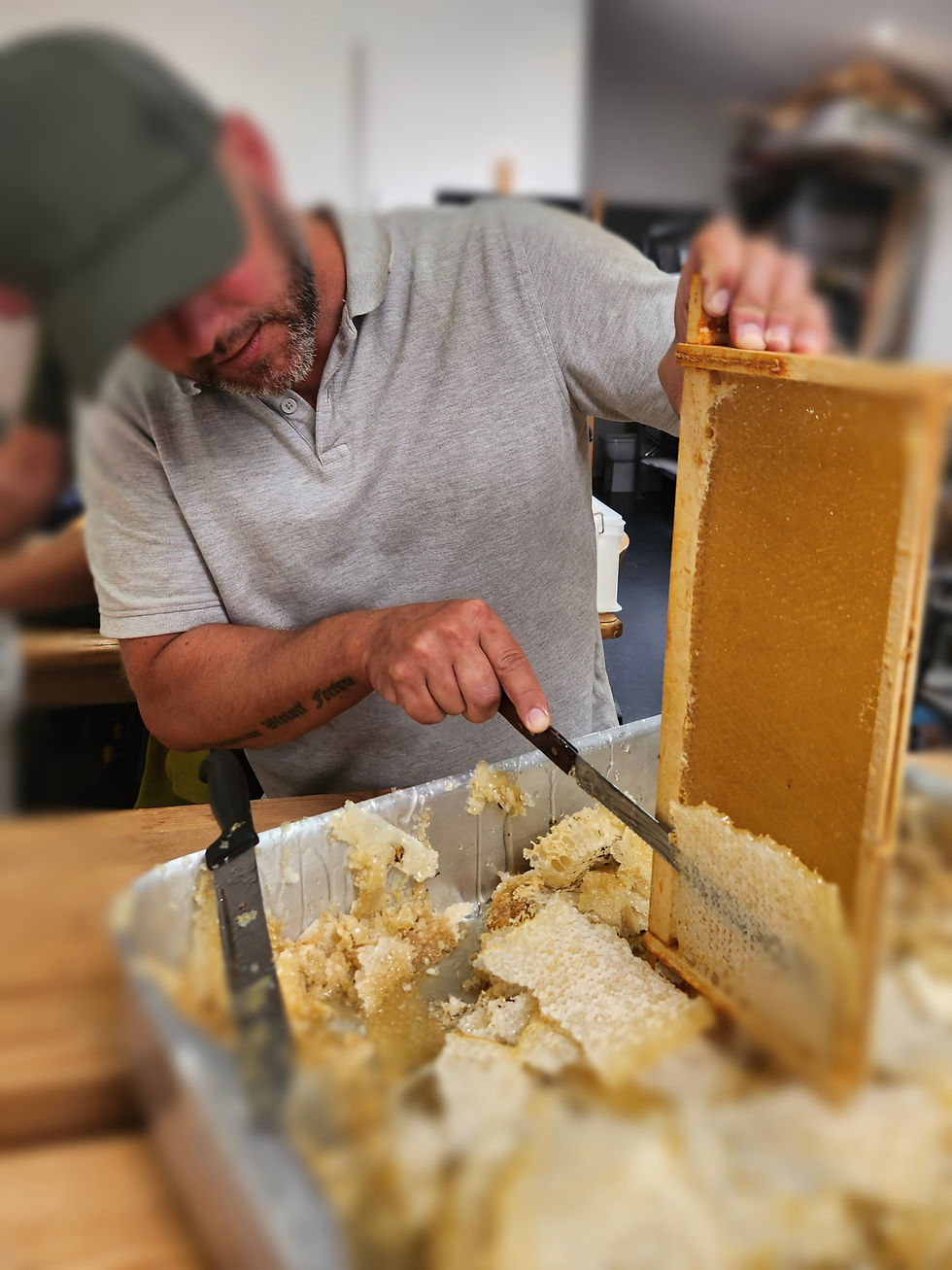
Real honey is a craft
Local honey takes time, weather, forage, colony health, inspections, disease management, equipment, fuel, hours—and the beekeeper’s hands, heart, and sometimes stings. Each jar is the result of tens of thousands of bee flights and hundreds of hours of care.
When you buy from a local beekeeper, you’re buying authenticity. A jar with an origin story. Flavour shaped by hedgerows, wildflowers, orchards, the soil, and the season. A snapshot of the land you live on.
Cheap honey undercuts the real stuff
Every jar of imported supermarket “honey” that sells for £1.20 makes it harder for local beekeepers to keep their hives alive, healthy, and producing. We want thriving pollinators, healthy ecosystems, and sustainable food systems—but that won’t happen if the only honey people buy is the cheapest on the shelf.
The £6 coffee paradox
Here’s the irony: People will happily pay £6 for a coffee loaded with syrups, emulsifiers, stabilisers, sugar and ice…
But raise an eyebrow at £6–£8 for honey that came from bees working flowers a mile from their home.
If anything deserves the premium, it’s the jar of pure, unadulterated nectar that hasn’t been boiled, blended, or bulked out.
So here’s the simple truth
Real honey isn’t cheap — because it’s real.
Cheap honey isn’t real — because it’s cheap.
Support your local beekeepers.
Support your local ecosystems.
Support real food.
And the next time someone hesitates at the price of a jar of local honey? Ask them if they’d like it shaken over ice with some caramel syrup. That usually does the trick.


Comments